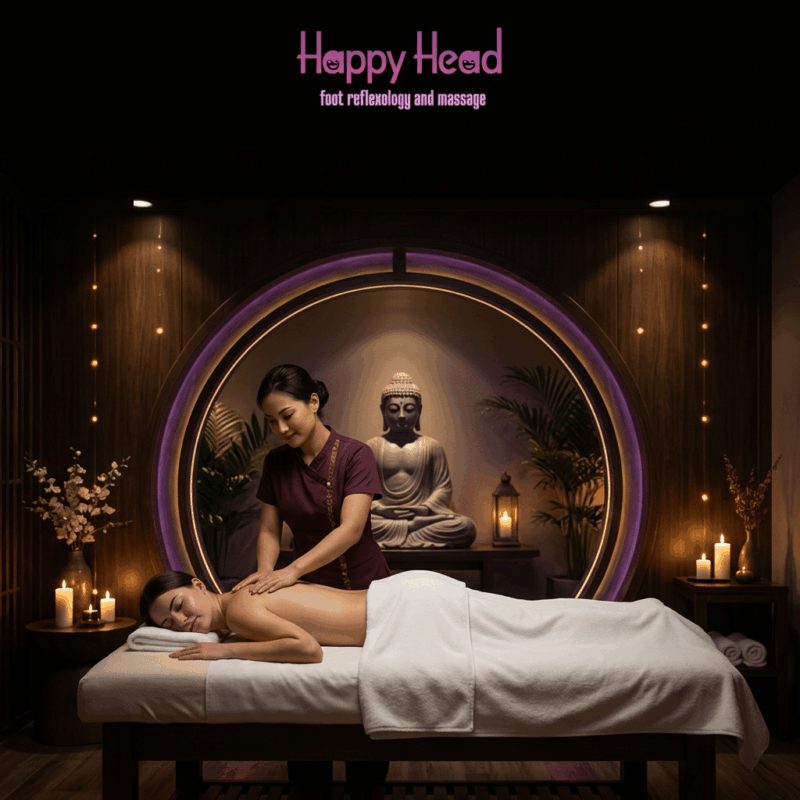
If you’re tired of waking up stiff, sitting through workdays with a dull ache, or putting off activities you love because your back won’t cooperate, you’re not alone. Lower back pain is one of the most common reasons San Diego residents seek professional bodywork, and the good news is that massage for lower back pain in San Diego offers a natural, drug-free way to release tight muscles, calm inflamed tissue, and restore the comfortable movement you’ve been missing. At Happy Head Massage, our therapists combine deep tissue, Swedish, and Asian fusion techniques to target the exact muscles driving your lumbar pain — with sessions starting at just $69/hr.
In This Article
- Why Lower Back Pain Is So Common in San Diego
- How Massage for Lower Back Pain in San Diego Actually Works
- The Best Massage Techniques for Lower Back Pain
- What we can honestly say
- What to Expect During Your Session
- How Often Should You Get Massage for Lower Back Pain?
- Between-Session Self-Care for a Happier Lower Back
- Book Your Massage for Lower Back Pain in San Diego
Why Lower Back Pain Is So Common in San Diego
San Diego’s active, outdoor lifestyle is wonderful for your soul but tough on your lumbar spine. Surfing, paddleboarding, hiking Torrey Pines, hauling kids to Mission Bay, biking to Pacific Beach — every one of those weekend favorites loads the lower back. Add eight-plus hours of desk work in between, and the muscles that stabilize your spine never really get a break.
The Three Biggest Culprits
Most lower back pain we see at Happy Head Massage falls into three buckets: muscular tightness from overuse or under-use, postural compression from prolonged sitting, and compensation patterns where your glutes, hip flexors, and hamstrings tug your pelvis out of alignment. All three respond beautifully to skilled hands — which is why massage for lower back pain in San Diego has become a go-to wellness habit, not just a treatment for acute flare-ups.
How Massage for Lower Back Pain in San Diego Actually Works
When a trained therapist works on your lumbar region, several things happen at once. Direct pressure breaks up adhesions in the erector spinae, quadratus lumborum, and multifidus muscles. Cross-fiber friction calms trigger points that refer pain down into the hip and glute. Slow effleurage soothes the nervous system, lowering the pain-amplification signal traveling up your spine.
The Domino Effect on Surrounding Muscles
True relief from lower back pain rarely comes from working the back alone. Tight hip flexors anteriorly tilt the pelvis. Locked-up glutes refuse to fire, leaving the lumbar muscles to do their job. Hamstrings pull the sit bones downward. A skilled deep tissue massage session at Happy Head addresses all of these supporting players, which is why our clients walk out feeling lighter from the ribs down.
The Best Massage Techniques for Lower Back Pain
Different bodies need different approaches. Here’s how our therapists choose the right tool for the job during a massage for lower back pain in San Diego.
Deep Tissue Massage
If your pain is chronic, stubborn, and feels “stuck,” deep tissue work is usually the answer. Therapists use slow, focused strokes and sustained pressure to reach the deeper layers of muscle and fascia where adhesions live. Expect to breathe through some intense moments — and to feel meaningfully looser the next morning.
Swedish Massage
For acute soreness, inflammation, or anxiety-driven muscle holding, Swedish massage is gentler and equally effective. Long gliding strokes calm the nervous system, improve circulation, and flush metabolic waste from tired muscles without aggravating sensitive tissue.
Asian Fusion Massage
Our signature Asian fusion massage blends Shiatsu, Thai-inspired stretching, and acupressure to address back pain holistically. Therapists work meridian lines that influence the kidneys, bladder, and gallbladder — channels Eastern medicine has long associated with low-back vitality — while passive stretches gently decompress the lumbar spine.
Foot Reflexology Add-On
It sounds counterintuitive, but reflex points along the inner arch of the foot map directly to the spine. Adding foot reflexology to a back-focused session can amplify relief, especially for clients who can’t tolerate deep prone work.
What we can honestly say
You don’t have to take our word for it. The National Center for Complementary and Integrative Health (part of the NIH) has reviewed multiple clinical trials and concluded that massage therapy provides meaningful short-term relief from chronic low-back pain. A landmark 2011 study in the Annals of Internal Medicine followed 401 adults with chronic lumbar pain and found that ten weekly massages produced benefits that lasted at least six months — with participants reporting less pain, better sleep, lower anxiety, and improved daily function.
Mayo Clinic likewise notes that massage is generally safe and most useful for back pain that has been lingering four weeks or longer, citing reduced muscle tension and stress relief as the primary mechanisms. The takeaway: skilled massage for lower back pain in San Diego isn’t a placebo. It’s a clinically supported piece of a smart pain-management plan.
What to Expect During Your Session
Walking into one of our calm, dimly lit studios for the first time? Here’s the flow.
The Intake
Your therapist will ask about when the pain started, what makes it better or worse, your work setup, your activity level, and any prior injuries. Be specific — “tight on the right side of my SI joint when I sit longer than thirty minutes” gives us far more to work with than “my back hurts.”
The Session Itself
Most lower-back sessions are 60 or 90 minutes. The therapist will spend time on your upper back, glutes, hips, and hamstrings before zeroing in on the lumbar muscles themselves. You’re in charge of pressure at all times; speak up if anything feels too intense or not deep enough.
The After-Glow
You may feel a little tender for 24 hours, especially after deep tissue work. Hydrate generously, take a warm shower, and avoid heavy lifting that evening. By the following morning, most clients report a noticeable reduction in stiffness and a much wider range of motion.
How Often Should You Get Massage for Lower Back Pain?
For acute pain, we often recommend weekly sessions for three to four weeks, then tapering to every other week. For maintenance once you’re feeling great, a monthly tune-up is enough for most desk workers and weekend warriors. Athletes training for a specific event — a marathon, a long-course triathlon, a surfing trip — benefit from a bi-weekly cadence to stay ahead of the load.
Consistency is the magic word. One spectacular massage will give you a great week. A steady rhythm of massage for lower back pain in San Diego will change the way your back feels for the long term.
Between-Session Self-Care for a Happier Lower Back
What you do between appointments matters as much as what happens on the table. A few habits that pair beautifully with our work:
Move every 30 minutes if you sit for a living — even a 60-second walk to the kitchen resets your pelvis. Stretch your hip flexors with a daily kneeling lunge. Strengthen your glutes with bridges or banded clamshells; weak glutes are the silent saboteur behind most chronic lumbar pain. Use a tennis ball or lacrosse ball against the wall to release the QL and glute medius before bed. Sleep on a medium-firm mattress with a pillow under your knees (if you’re a back sleeper) or between them (if you’re a side sleeper).
Book Your Massage for Lower Back Pain in San Diego
You don’t have to white-knuckle your way through another stiff morning. Happy Head Massage has convenient studios across the county, with sessions starting at just $69/hr and same-day appointments often available. Whether you’re closer to the coast, downtown, or inland, there’s a room with your name on it.
Browse all our locations on the all-locations page, or jump straight to a neighborhood: Downtown San Diego, Carlsbad, Pacific Beach, Mission Valley, or Sports Arena. Ready to feel like yourself again? Book your massage for lower back pain in San Diego now and let our therapists do what they do best.


