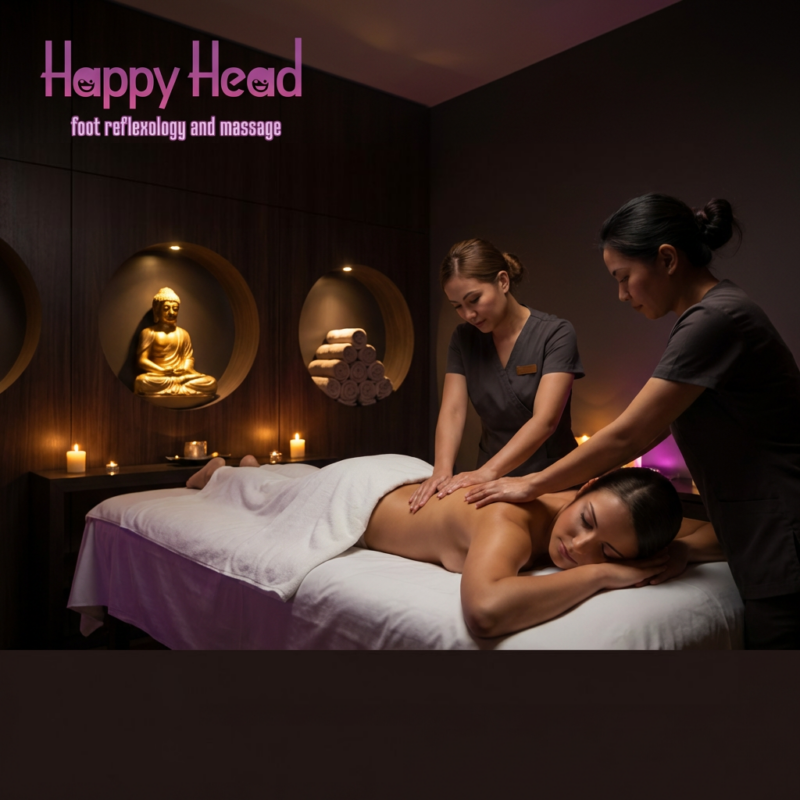
Training for a triathlon in San Diego is its own beautiful kind of suffering. You’re stacking ocean swims, long Pacific Coast Highway rides, and brick runs in the afternoon heat — and your body is paying the bill. If you’ve been searching for massage for triathletes in San Diego, you already know recovery isn’t optional. It’s the work between the workouts. Targeted bodywork helps tight hips, paddle-worn shoulders, and run-pounded calves bounce back so you can keep stacking quality sessions instead of nursing one more nagging injury.
At Happy Head Massage, we work with triathletes year-round — sprint racers, age-groupers chasing 70.3 PRs in Oceanside, and first-timers tackling the Mission Bay Triathlon. This guide walks through why massage for triathletes in San Diego works, which modalities fit each phase of training, and how to build recovery bodywork into a smart taper. Sessions start at $69/hr, so dialed-in recovery is genuinely accessible.
In This Article
Why triathletes in San Diego need massage
San Diego is one of the country’s premier triathlon training hubs. Year-round riding weather, open water at La Jolla Cove and Mission Bay, and a deep bench of swim clubs and tri teams mean local athletes train more volume than almost anywhere else. That volume comes with a cost: cumulative micro-trauma in the connective tissue, sticky fascia, and overactive trigger points that quietly tank performance.
The National Center for Complementary and Integrative Health is measured about what massage delivers: short-term relief of pain and muscle tension, with the evidence generally weak. We are not going to quote you a percentage drop in soreness, because no dependable one exists. For triathletes hammering three disciplines, that delta is the difference between a Sunday long run that feels strong and one that feels like dragging anchors.
Recovery is where adaptation happens
You don’t get fitter during a workout — you get fitter during recovery. Sleep, nutrition, and hands-on bodywork are the inputs that let your body absorb the training load. Skipping recovery is the fastest path to overtraining, stress fractures, and mid-season plateaus.
The three-sport toll on your body
Triathlon is uniquely brutal because each discipline overloads a different chain — and the chains overlap. A good massage for triathletes in San Diego addresses all three sport-specific patterns in a single session.
Swim damage
Repetitive overhead reaching tightens the lats, pecs, and subscapularis. Internal rotation of the shoulders shortens the front line and pulls the head forward. Most triathletes carry chronic tension around the shoulder blade that no amount of foam rolling can reach.
Bike damage
Hours in aero position lock the hip flexors short and shut down the glutes. Quads get dominant, hamstrings stay tight, and the lower back compensates. The neck and traps work overtime holding the head up against an aggressive riding posture.
Run damage
Running off the bike compounds everything. Calves and Achilles tendons take the loading. Plantar fascia tightens. The IT band, piriformis, and TFL get cranky fast.
Best types of massage for triathletes in San Diego
Not every modality belongs in a triathlete’s rotation. Here’s how we match technique to need for our triathlon clients.
Deep tissue massage
This is the workhorse. Deep tissue massage targets the deeper layers of muscle and fascia where chronic training adhesions live. It’s the right choice 4–10 days out from a hard session or race — far enough out that tissue has time to adapt.
Swedish massage
For race week and the day after a long brick, lighter is smarter. Swedish massage uses long, flowing strokes to flush metabolic waste, calm the nervous system, and increase circulation without creating new soreness.
Asian fusion massage
Our signature Asian fusion massage combines acupressure, deep tissue, and stretching elements. It’s especially effective massage for triathletes in San Diego because it addresses meridian-level tension patterns and integrates passive stretching that opens locked hip flexors and tight hamstrings.
Foot reflexology
Run-pounded feet love attention. Foot reflexology targets the plantar fascia, the arch, and pressure points that mirror the rest of the body. Many triathletes add reflexology onto a deep tissue appointment during high mileage blocks.
Matching massage to your training phase
Smart triathletes periodize their massage just like they periodize their training. The right massage for triathletes in San Diego looks different in base building than in race week.
Base phase (8+ weeks out)
This is the time for deeper, therapeutic work. Volume is moderate but consistent, and your tissue can benefit from focused deep tissue sessions every 2–3 weeks. Address chronic issues now, not three days before the gun goes off.
Build phase (4–8 weeks out)
Intensity ramps. Brick workouts get longer. We typically see triathletes weekly or every 10 days during this phase. Sessions stay deep but pull back from anything that creates new soreness within 72 hours of a key workout.
Peak and taper (1–3 weeks out)
Switch to flushing work — Swedish or light Asian fusion. The goal is parasympathetic activation, better sleep, and increased circulation. No deep work in the final 7–10 days.
Common triathlete trouble spots we focus on
Across thousands of sessions, these patterns show up in nearly every massage for triathletes in San Diego we deliver.
Tight hip flexors and weak glutes
Cycling shuts down the glutes and shortens the psoas. Running with that combination is a recipe for low back pain, knee tracking issues, and slow paces. Targeted bodywork on the hip flexors is one of the highest-leverage things you can do.
Calf and Achilles tension
San Diego’s hills — Soledad, Torrey Pines, Mount Soledad — turn calves into bricks. We work the gastrocnemius, soleus, and posterior tibialis to keep the lower leg supple.
Thoracic spine stiffness
Aero position locks the upper back. A stiff thoracic spine forces the shoulders to work harder during the swim and the lumbar spine to compensate on the run.
Shoulder impingement risk
High swim volume without rotator cuff care creates impingement risk. We address the supraspinatus, infraspinatus, teres minor, and the pec minor that pulls the shoulder forward.
Race-week and post-race strategy
Race week is where most triathletes get massage wrong. Going too deep too close to race day leaves your legs heavy and your nervous system rattled.
10–14 days out
The last window for meaningful deep work. We dig into the hips, calves, and upper back — anything you know will flare on race day. Then we get out of the way and let it settle.
3–5 days out
A medium-pressure Swedish or light Asian fusion. Focus is circulation, lymphatic flow, and parasympathetic activation. You should leave looser and calmer — never sore.
24–72 hours post-race
This is gold. A flushing session within three days of crossing the line dramatically shortens recovery time. NIH-summarized research notes massage benefits are most evident when the session happens within two hours of exercise.
Triathlete massage FAQs
How often should triathletes get a massage?
Match it to your training load. Every two weeks works well during base training, weekly during a heavy build block, then lighter and less frequent through taper. Consistency matters more than rescuing yourself after something already aches.
Should I get a massage before or after a race?
Both can help, with different goals. Keep pre-race work light and at least three to five days out — deep work too close to race day can leave your legs feeling flat. After the race, give it 24–72 hours, then book a gentler session while your body settles.
What type of massage is best after a long brick workout?
If the soreness is deep and specific — hips, calves, low back — deep tissue is the usual pick; just leave a day or two before your next hard session. If you’re simply wiped, a Swedish session helps you unwind without adding more load to tired muscles.
How much does massage for triathletes in San Diego cost?
Sessions at Happy Head start at $69/hr, with package pricing that rewards the kind of regular booking a training plan actually calls for. Many triathletes choose 90 minutes to cover swim, bike, and run in one visit.
Book your triathlete recovery session
Happy Head Massage has seven locations across San Diego County, so a session that fits your training schedule is almost always nearby. Sessions start at $69/hr, with packages that bring per-session costs lower for athletes booking regularly. If you swim at La Jolla Cove, our Pacific Beach studio is ten minutes down the coast and your post-swim move. North County riders coming off a Highway 101 loop can roll straight into Carlsbad. Athletes finishing bricks around Balboa Park book at Downtown San Diego. Browse our complete list of all locations to find the spot closest to your weekly route.
The athletes who get the most from massage for triathletes in San Diego book consistently — every two weeks during base, weekly during build, lighter through taper. Massage isn’t a band-aid you use when something hurts; it’s a training tool that keeps small problems from becoming big ones.
Ready to roll? Book your session at Happy Head Massage today and get back to stacking the workouts that actually move the needle. With 3,000+ five-star reviews across seven San Diego studios, your legs are in experienced hands — and your A-race will thank you.


